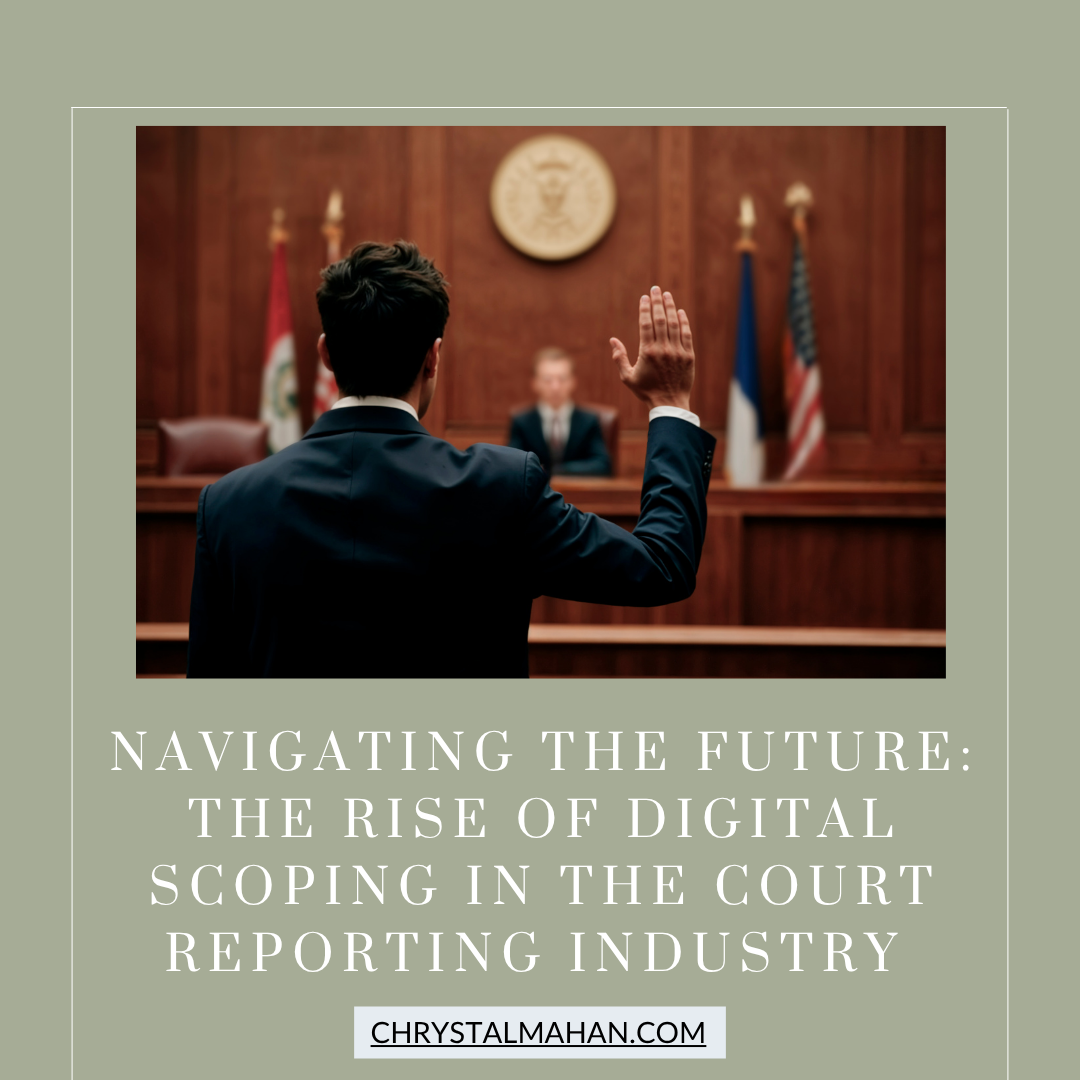
Navigating the Future: The Rise of Digital Scoping in the Court Reporting Industry
The legal industry does not slow down for anyone. Deadlines pile up, deposition schedules shift without warning, and the demand for clean, accurate, certified transcripts keeps climbing. You are expected to deliver a flawless final product every single time, and the margin for error is exactly zero. That pressure is real, and it is not going away.
Here is what is happening across the court reporting field right now: the way transcripts get produced is changing. Digital reporting is growing, CAT software keeps evolving, and the professionals supporting this work are expanding what they can offer. Scopists, proofreaders, and editors are no longer niche helpers. They are strategic partners in getting your transcripts from rough draft to certified copy without sacrificing accuracy or your sanity. The industry is not replacing the skilled human professionals. It is asking the skilled human professional to do more, faster, and with greater precision than ever before.
That is where a dedicated legal transcript proofreader and digital scoping professional becomes one of the most valuable relationships in your workflow. Whether you are a traditional court reporter working in CAT software or a digital reporter building out your editing process, having the right support behind your work means your name goes on transcripts you are genuinely proud of. It means fewer callbacks, fewer corrections, and more time to take on the next job.
What Digital Scoping Actually Means for Modern Court Reporters
Digital scoping is still a term that causes some confusion in the field, and that confusion is worth clearing up. Traditional scoping involves a scopist working within CAT software to clean up a reporter’s steno-generated transcript, filling in untranslates and formatting the document before it goes to proofreading. Digital scoping follows a similar philosophy, but it applies to audio-based recordings that have been transcribed, either through a digital reporter in the field or through a transcription platform that produces a rough draft from a recorded proceeding.
The core work is the same in both cases: someone has to go line by line, compare the audio or original steno output to the transcript, correct errors, apply proper formatting, and make sure the final document meets the standards required for legal use. That is skilled work. It requires a sharp ear, strong grammar instincts, familiarity with legal terminology, and the patience to do the job right rather than fast. Rushing that process is where errors slip through, and in a legal transcript, errors have consequences.
As more courts and agencies expand their acceptance of digitally reported proceedings, the demand for qualified digital scopists is growing right alongside it. Reporters who have worked with a trusted scopist for years are now asking whether that person can also handle digital files. In many cases, the answer is yes, provided that a professional has invested in the right training and experience to bridge both worlds effectively.
Why Transcript Proofreading Remains a Non-Negotiable Step
There is a common assumption in some corners of the industry that if a transcript has been scoped, proofreading is redundant. That assumption is worth examining closely, because it does not hold up under scrutiny. Scoping and proofreading are related but distinct processes, and each catches different categories of errors.
A scopist is working closely with the original output, whether steno or audio, and the focus is on accuracy at the line level. A proofreader approaches the finished document with fresh eyes, reading it as a complete record and catching the things that can slip past even an experienced scopist. That includes inconsistent spellings of names across a multi-day deposition, formatting issues that affect the readability of the certified copy, punctuation errors that change the meaning of a sentence, and errors that crept in during final formatting.
In a legal context, where transcripts are entered into evidence and relied upon by attorneys, judges, and parties to litigation, a second set of eyes is not a luxury. It is a safeguard. Reporters who have both a scopist and a proofreader in their workflow consistently produce cleaner, more consistent certified transcripts, and that reputation builds the kind of client relationships that sustain a long-term freelance career.
How to Build a Workflow That Supports Both Traditional and Digital Reporting
Whether you are working in a traditional CAT-based environment or you are navigating the newer world of digital reporting, your workflow is the backbone of your business. A disorganized or inconsistent process is where errors multiply and deadlines get missed. Building a clear, repeatable process from recording or steno output to certified copy is one of the most important investments you can make in your practice.
Start by identifying where the bottlenecks are. If you are delivering transcripts late, is it because the scoping step is taking too long, or because you are doing your own proofreading at the end of an already long day? If you are getting correction requests back from attorneys, where in the process are those errors originating? Honest answers to those questions point you toward where to bring in support and what kind of support will have the biggest impact.
Working with a professional who understands both traditional and digital workflows gives you flexibility as the industry continues to shift. You are not locked into one method or one set of tools. You have a support partner who can move with you as your work evolves, whether that means expanding into digital reporting, taking on more volume, or simply getting your turnaround times down to where you want them.
The Professional Edge That Comes From the Right Support Team
Accuracy in legal transcription is not just a professional standard. It is a reflection of your credibility as a reporter. The attorneys and agencies who hire you are trusting you with proceedings that matter, and the transcript you certify is part of the permanent legal record. That is a responsibility that deserves the full weight of a well-built support system behind it.
Reporters who invest in professional scoping and proofreading support consistently report lower stress, faster turnaround times, and stronger client retention. When the support side of your workflow runs smoothly, you can focus on what you do best: capturing the record with precision and professionalism. The editing and quality control work belongs in hands that are trained and dedicated to doing it well.
The legal industry is changing, but the standard it holds for transcript accuracy is not. Digital reporting is expanding what is possible, and scoping and proofreading are expanding right alongside it. The reporters who are building strong support teams now are the ones who will be positioned to take on more work, better clients, and greater professional stability in the years ahead.
Ready to Learn More About Building a Stronger Transcript Workflow?
If this post sparked some questions about your own process, there is more where this came from. Browse the blog for additional posts on legal transcription, digital scoping, and building a workflow that works as hard as you do. And if you want to slow down for a few minutes and think through what your next step looks like, pull up a chair and join me for coffee. The pot is always on, and there is always something worth talking about.
Like what you read? Drop me a line – let’s chat over virtual coffee.
~ Chrystal