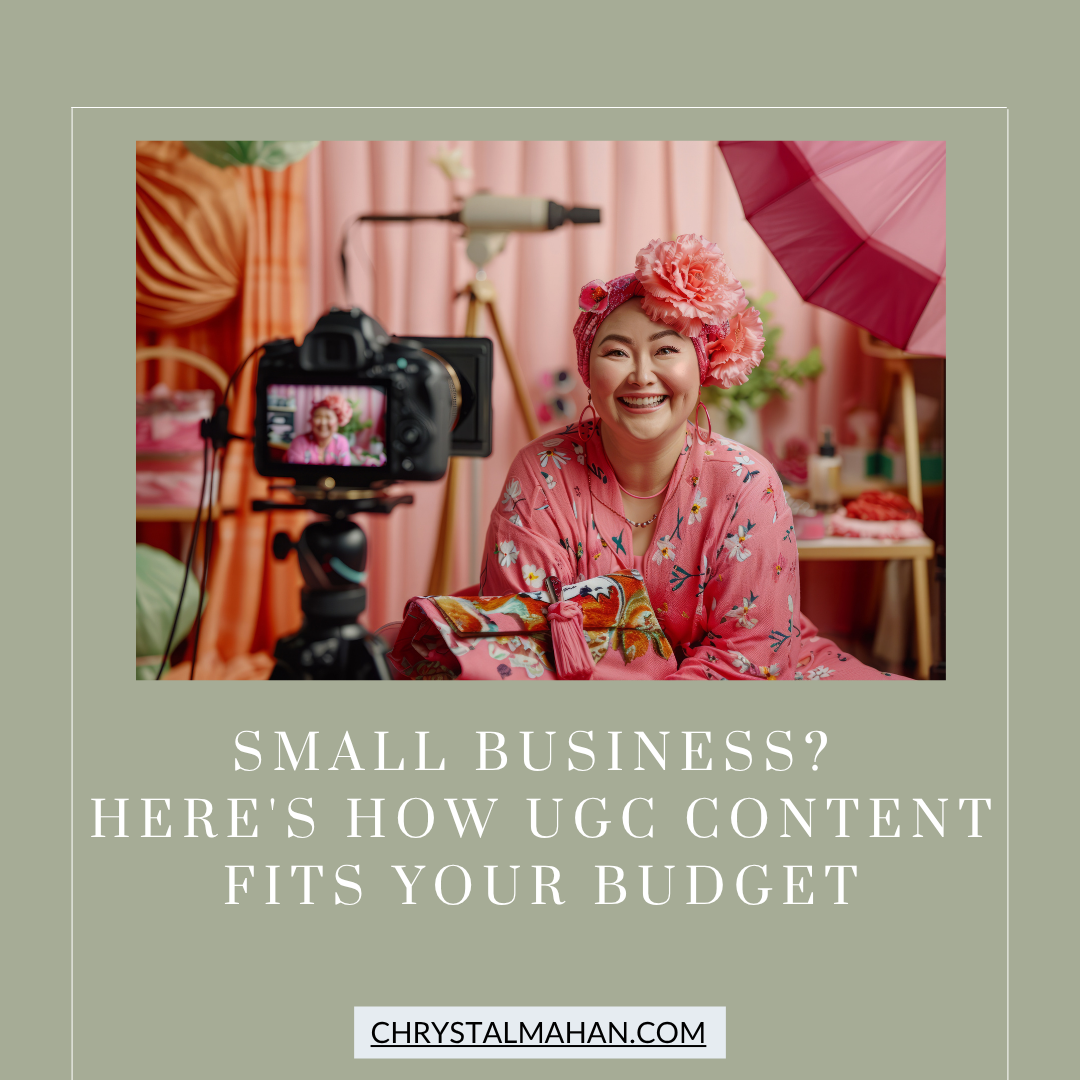
Small Business? Here’s How UGC Content Fits Your Budget
Running a small business means making every dollar stretch further than it was ever designed to go. You are the marketer, the strategist, the fulfillment team, and the customer service department, all before lunch. When someone tells you that you need a content strategy, a social media presence, and a steady stream of fresh, engaging video content to compete, it can feel less like advice and more like a threat. The cost of professional content production alone is enough to make any small business owner close that browser tab and go back to hoping word of mouth does the heavy lifting.
Here is the thing: you have been operating under the assumption that high quality marketing content requires a high quality marketing budget. That assumption has quietly been costing you customers. User generated content, more commonly known as UGC, has fundamentally changed what small businesses can afford to put in front of their audience, and the brands that understand how to deploy it strategically are the ones showing up in feeds, in search results, and in shopping carts while their competitors wonder where all the attention went.
This is not about choosing between authentic content and professional marketing. It is about understanding that you need both, that they serve different purposes, and that when you combine them intentionally, you build the kind of trust and visibility that turns browsers into buyers. The good news is that the version of this strategy built for a small business budget is more accessible than you have ever been led to believe.
Why UGC Content Is the Most Affordable Marketing Asset You Are Not Using
The cost conversation around content marketing has long been dominated by production quotes, agency retainers, and the kind of numbers that make small business owners feel like they are permanently priced out of the room. UGC flips that model entirely. Rather than paying a production team to create content that looks polished but can feel distant, UGC delivers content created by real people talking about real experiences, and it is a fraction of the cost.
Working with UGC creators is not the same as influencer marketing, and the distinction matters for your budget. Influencer campaigns typically price in reach, meaning you are paying for access to someone’s audience. UGC creators are paid for the content itself. You receive the usage rights and distribute the content through your own channels on your own timeline. A single piece of UGC content can run across your website, your social platforms, and your ads simultaneously, multiplying the return on a single creative investment.
For small businesses operating without a dedicated marketing budget line item, this model is a genuine advantage. You can commission a handful of short form video reviews or product demonstrations for what you might otherwise spend on a single sponsored post, and you walk away with assets you actually own. That is not a workaround. That is a smarter allocation of the budget you already have.
What Professional Content Does That UGC Cannot Do Alone
Leaning into UGC does not mean abandoning the more polished, strategic side of your content entirely. Both serve your business, and both serve your customer, but they do different jobs. Understanding where each one lives in the buyer journey is what allows you to use them together without overspending on either.
Professional content, whether that is a well crafted brand video, a designed landing page, a strategic blog post, or a produced social asset, is where your brand establishes authority and clarity. When a potential customer lands on your website for the first time, they are deciding whether they trust you enough to spend money with you. That decision happens in seconds, and it is heavily influenced by the quality and consistency of what they see. UGC alone cannot carry that weight because it is inherently variable. It is created by different people with different cameras, different lighting, and different communication styles.
Where UGC shines is in reinforcing the decision a customer is already leaning toward. It provides social proof, the relatability, and the real world confirmation that what you are selling does what you say it does. Think of professional content as the reason someone believes you are worth considering. Think of UGC as the reason they stop hesitating. You need both sides of that equation to close the gap between a curious visitor and a paying customer.
How Small Businesses Can Build a Sustainable UGC Strategy Without Overspending
The most common mistake small businesses make with UGC is treating it like a one time experiment rather than a repeatable content system. A sustainable UGC strategy does not require a large upfront investment. It requires a clear process, a consistent ask, and a commitment to repurposing the content you collect across every channel where your audience is paying attention.
Start by identifying the one or two platforms where your ideal customer is most active. You do not need to be everywhere at once, and spreading your UGC content too thin before you have established what works is how budgets disappear without results. Choose your primary channel, commission or collect content specifically suited to how that platform delivers it, and build your library from there. Even two to three strong UGC pieces per month, used consistently, will outperform a single large production push that has no follow through.
Work with creators who already understand your niche or your product category. You will spend less time briefing and correcting, and you will receive content that connects more naturally with your audience because the creator already speaks their language. As your UGC library grows, rotate assets strategically, test what resonates, and use the performance data to inform both your next round of UGC requests and your broader content decisions. This is how a small budget becomes a smarter budget.
Addressing the Cost Concerns That Keep Small Businesses From Getting Started
The hesitation around content investment is understandable, and it is worth addressing directly rather than glossing over with generalities. Most small business owners are not avoiding UGC because they do not see the value. They are avoiding it because they are not sure what it costs, whether it will work, or how to avoid wasting money on content that sits unused on a hard drive.
UGC creator rates vary based on experience, content type, and usage rights, but for short form video content at the small business level, you are typically working in a range that is accessible without a dedicated agency budget. The key is knowing what you are buying. A well briefed UGC deliverable includes the video file and the rights to use it across your platforms. That one piece of content can run as an organic post, as ad creative, and embedded on a product page. When you calculate the cost against all three uses, the math changes significantly.
The risk of doing nothing is higher than the risk of starting small. Every month your competitors are building content libraries, testing creative, and learning what moves their audience. You do not have to match their volume to stay competitive. You have to start building yours. One piece of content put to work across three channels is a better return than a perfect strategy still sitting in a planning document waiting for the budget to feel right.
Your Content Strategy Does Not Have to Wait for a Bigger Budget
The belief that real marketing is something you work toward once the business grows is one of the most persistent and costly myths in small business ownership. Content is not a reward for reaching a certain revenue threshold. It is one of the primary tools that helps you get there. Waiting for perfect conditions is how businesses stay invisible while the ones willing to start small build the audiences that sustain them long term.
A combined approach of strategic professional content and well placed UGC does not require a reinvention of your business or a budget you do not have. It requires an honest look at where your customer is making decisions, what kind of content earns their trust at each stage, and a commitment to showing up consistently with the resources available to you right now. Small and steady beats large and sporadic every time in the content game.
You do not need to figure this out alone, and you do not need to spend big to get started. If you are ready to think through what a realistic, budget aware content strategy looks like for your specific business, let’s talk it through over a virtual coffee. And if you want to keep exploring before you are ready for that conversation, there is more waiting for you in the blog. Pull up a chair and stay a while.
Ready to dive deeper? Browse more posts on content strategy, digital business operations, and marketing without the overwhelm. When you are ready to chat one on one, book a virtual coffee and let’s build something that actually fits your business.