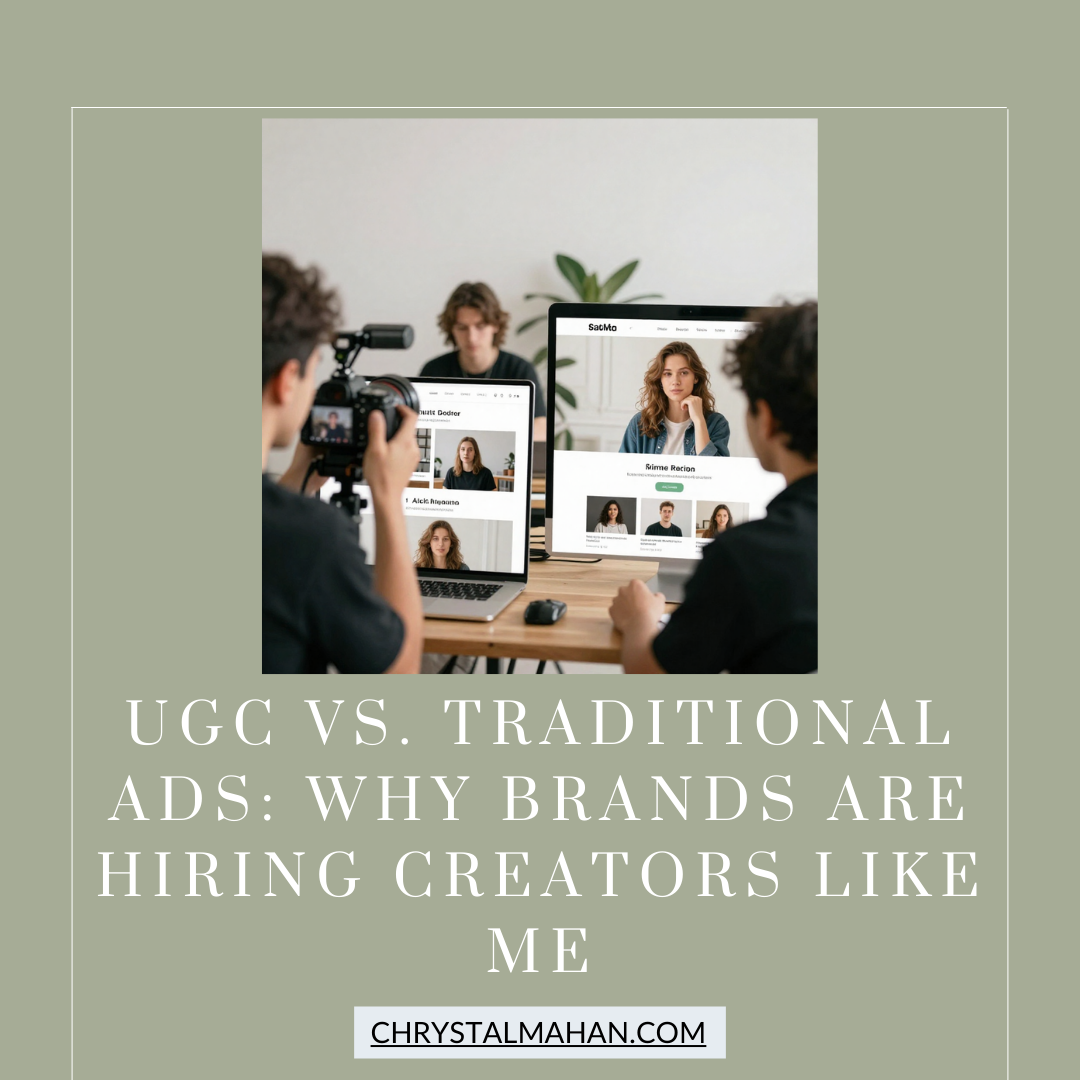
UGC vs. Traditional Ads: Why Brands Are Hiring Creators Like Me
Scroll through your social media feed right now. How many polished, studio-perfect advertisements did you skip past without a second thought? Now think about the last time you stopped to watch someone’s genuine product review or honest recommendation. That difference, that moment of authentic connection, is exactly why the advertising landscape has fundamentally shifted. Traditional ads are losing their grip on consumer attention while user generated content is capturing hearts, minds, and wallets.
The numbers tell a compelling story. Consumers trust UGC 2.4 times more than brand-created content, and 79% of people say user generated content highly impacts their purchasing decisions. Meanwhile, traditional advertising faces an uphill battle against ad blockers, banner blindness, and a generation of consumers who can smell a sales pitch from a mile away. Brands are waking up to this reality, and they’re scrambling to pivot their marketing strategies before they lose relevance entirely. The shift isn’t just a trend; it’s a fundamental transformation in how businesses connect with their audiences.
This is where creators like me step in to bridge that gap. As a UGC creator and digital business manager,I help brands navigate this new landscape by producing authentic, relatable content that resonates with real people. I understand both sides of the equation: the business need for measurable results and the consumer desire for genuine connection. If you’re ready to understand why your competitors are investing in creator partnerships and how this approach can transform your marketing ROI, let’s dive into the reality of modern advertising.
Why Traditional Advertising Is Losing Its Power
Traditional advertising spent decades perfecting the art of interruption. Commercials interrupt your favorite show. Banner ads interrupt your reading. Pop-ups interrupt your browsing. The entire model relies on forcing brand messages into spaces where consumers didn’t ask for them, and modern audiences have had enough. We’ve developed sophisticated mental filters that automatically tune out anything that looks, sounds, or feels like an advertisement. This phenomenon, called banner blindness, means that even when people see your traditional ads, their brains literally don’t register them.
The trust factor has eroded even further. When a brand tells you their product is amazing, there’s an inherent skepticism because of course they would say that. They’re trying to sell you something. Consumers have become savvy to marketing language, stock photos, and the veneer of perfection that traditional advertising presents. They know those models didn’t really achieve those results, that the testimonials might be cherry-picked, and that the experience they see in the ad probably won’t match reality. This credibility gap has become a chasm that traditional advertising simply cannot cross.
Beyond trust issues, traditional advertising faces practical challenges in the digital age. Ad blocking software has become standard, with nearly 43% of internet users worldwide employing some form of ad blocker. Streaming services offer ad-free tiers that people happily pay for. Younger demographics, the holy grail of marketing, have largely abandoned traditional media channels altogether. When your target audience isn’t watching cable TV, reading print magazines, or clicking on display ads, your beautifully crafted traditional campaigns are essentially invisible. Brands are pouring money into channels that their ideal customers have already left behind.
The Authenticity Advantage of User Generated Content
User generated content works because it doesn’t feel like marketing, even though it absolutely is. When I create content for a brand, I’m speaking as a real person who has actually used the product or service. There’s no script written by a corporate copywriter, no studio lighting to create impossible perfection, no celebrity endorsement that feels out of reach. It’s just me, or another creator like me, sharing genuine experiences in a way that feels like a conversation with a friend. That authenticity is incredibly valuable in a world drowning in polished, perfect, and ultimately unrelatable brand messages.
The psychology behind why UGC works is rooted in social proof, one of the most powerful influences on human behavior. When we see someone like us using and enjoying a product, our brains interpret that as validation. It’s the digital equivalent of asking a friend for a recommendation before making a purchase. We trust peer opinions more than we trust corporate messaging because peers don’t have a vested interest in lying to us. They’re sharing their real experience, warts and all, which makes their positive reviews infinitely more credible than any brand claim could ever be.
This authenticity also allows for a level of relatability that traditional advertising can never achieve. When I create UGC, I’m showing how a product fits into real life, not an idealized fantasy version of life. I’m demonstrating actual use cases, addressing real concerns, and showcasing genuine reactions. Viewers see themselves in that content because it reflects their own reality. A mom watching another mom struggle to open a package while juggling a toddler, then rave about a product that actually made her life easier, is going to trust that recommendation far more than a perfectly lit commercial featuring a model pretending to be a parent.
How UGC Delivers Better ROI Than Traditional Campaigns
Let’s talk about the financial reality that’s driving this shift. Traditional advertising campaigns require massive upfront investments. You need to hire agencies, book studio time, pay for professional production, compensate models or actors, and then purchase expensive media placements to actually get your content in front of people. A single 30-second television spot can cost hundreds of thousands of dollars to produce, and that doesn’t include the media buy to actually air it. For many businesses, especially small to medium enterprises, this level of investment is simply out of reach.
UGC creation, by contrast, operates on an entirely different cost structure. Brands can partner with creators like me for a fraction of traditional advertising costs. We produce content using our own equipment, in real-world settings, with authentic delivery that resonates with audiences. The production timeline is faster, the content output is higher, and the cost per piece of content is dramatically lower. But here’s the kicker: that lower-cost content actually performs better. UGC generates 6.9 times higher engagement than brand-generated content, meaning you’re paying less and getting more impact.
The versatility of UGC also contributes to its superior ROI. When I create content for a brand, that single piece of content can be repurposed across multiple platforms and campaigns. It can live on social media, be featured on product pages, incorporated into email marketing, used in retargeting ads, and shared in countless other ways. Traditional advertising creative is often locked into the specific medium it was created for, but UGC is inherently flexible. Brands get more mileage out of every dollar spent, and they can test and optimize their approach based on real performance data rather than gut feelings about what might resonate.
The Creator Partnership Model That Actually Works
Working with UGC creators isn’t just about hiring someone to make videos. It’s about building strategic partnerships that align with your brand values and business goals. The most successful brand-creator collaborations happen when there’s genuine fit between the creator’s audience and the brand’s target market. When I partner with a brand, I’m not just a content production service. I’m bringing my established audience, my unique perspective, my content creation skills, and my understanding of what resonates with real people. That combination creates content that feels authentic because it is authentic.
The best partnerships also respect creative freedom while maintaining brand guidelines. Brands that try to over-control every aspect of UGC end up with content that feels just as stiff and inauthentic as traditional advertising. The magic happens when brands trust creators to present their products in ways that feel natural to the creator’s style and voice. I know how to talk to my audience. I know what questions they have, what concerns they raise, and what type of content format they prefer. When brands leverage that expertise rather than fighting against it, everyone wins.
Long-term creator partnerships deliver even more value than one-off campaigns. When a creator consistently features and recommends a brand over time, it builds credibility and trust with their audience. Followers start to associate that creator with that brand, creating mental shortcuts that influence purchase decisions. It’s the difference between seeing an acquaintance mention something once versus having a trusted friend repeatedly endorse something they genuinely love. Brands that invest in ongoing relationships with select creators see compounding returns as that trust and association deepens over months and years.
Why Your Competition Is Already Making This Shift
If you’re reading this and thinking “interesting, but we’re doing fine with our current marketing,” I need to be direct with you. Your competitors are already ahead of you on this. Major brands across every industry have redirected significant portions of their marketing budgets toward creator partnerships and UGC campaigns. They’re seeing the data, recognizing the trends, and making strategic moves to capture market share while traditional advertisers are still debating whether this shift is real. Spoiler alert: it’s very real, and it’s accelerating.
The brands winning right now aren’t necessarily the ones with the biggest advertising budgets. They’re the ones who’ve figured out how to leverage authentic creator voices to build genuine connections with consumers. They’re the ones showing up in the feeds of their target customers through trusted voices rather than interruptive ads. They’re the ones generating conversation, engagement, and ultimately conversions through content that people actually want to watch. When your competitor’s UGC is getting thousands of organic shares while your traditional ad campaign gets politely ignored, the competitive disadvantage becomes painfully clear.
The window for early adoption advantages is closing, but there’s still opportunity for brands willing to act now. The creator economy is maturing, best practices are emerging, and the infrastructure for brand-creator partnerships is more developed than ever. However, the creators with the most engaged audiences and the strongest track records are getting selective about their partnerships. The brands that hesitate will find themselves competing for creator attention with bigger budgets and fewer options. The time to explore, test, and integrate UGC into your marketing strategy is right now, before this shift from experimental to essential is complete.
Making UGC Work for Your Brand Strategy
Starting with UGC doesn’t mean abandoning everything you know about marketing. It means evolving your approach to incorporate authentic voices alongside your existing strategies. The most effective approach is to view UGC as a complement to, not a replacement for, your broader marketing ecosystem. Start small with a pilot program working with a few select creators. Test different types of content, measure engagement and conversion metrics, and learn what resonates with your specific audience. This low-risk approach allows you to build confidence and expertise before scaling up.
The key to successful UGC integration is having clear objectives and measurement frameworks. What are you trying to achieve? Brand awareness? Direct conversions? Community building? Educational content? Different goals require different types of creators and content approaches. Work with creators who understand your objectives and have demonstrated success in achieving similar goals for other brands. Establish clear KPIs from the start so you can objectively assess performance rather than relying on subjective feelings about whether content “feels” right.
You also need systems to manage creator relationships effectively. This includes clear contracts, streamlined communication channels, organized content approval processes, and timely payment structures. As someone who works on both sides of these partnerships, I can tell you that brands who treat creators as valued partners rather than vendors get significantly better results. Responsive communication, fair compensation, creative respect, and professional operations make creators excited to work with you and motivated to produce their best work. That enthusiasm translates directly into content quality and campaign performance.
Your Next Steps in the Content Revolution
The advertising landscape has fundamentally transformed, and the brands thriving in this new environment are those who’ve recognized that authentic connection beats polished interruption every single time. User generated content isn’t a trendy tactic that will fade away. It’s a fundamental shift in how consumers discover, evaluate, and purchase products. The trust gap between brand messages and peer recommendations will only continue to widen as audiences become even more sophisticated at filtering out traditional advertising. The question isn’t whether to incorporate UGC into your strategy. The question is how quickly you can make that transition before your competitors capture all the attention.
Working with experienced creators who understand both the content side and the business strategy side gives you a significant advantage. You need partners who can produce engaging content while also understanding your broader marketing objectives, performance metrics, and brand positioning. This isn’t just about making videos. It’s about creating integrated content strategies that drive real business results. The intersection of creative content skills and strategic business thinking is where true marketing transformation happens, and it’s exactly the kind of holistic support that moves brands forward in meaningful ways.
Ready to explore how user generated content can transform your brand’s marketing performance? Browse through more posts on this site to deepen your understanding of digital marketing strategies that actually work in today’s landscape. Better yet, let’s grab a virtual coffee and talk about your specific challenges and opportunities. I’d love to hear about your brand, your current marketing approach, and how we might work together to create authentic content that resonates with your audience and drives the results you need. The conversation costs nothing, but the insights might just change everything about how you approach marketing.